A New Chapter for All Autism Talk
July 29, 2026
July 29, 2026
Coming Soon—Our NEW Greenfield, WI Learning Center! Learn More



FEATURED POSTS


Buying the perfect gift for kids and other loved ones can be challenging, and this can also be true when buying gifts for kids with autism. To help make your gift-giving easier, here are a few helpful tips to keep in mind when purchasing gifts for autistic children.
Research shows that incorporating interests and preferences into the learning and play environment of kids with autism can increase positive behaviors and aid in skill acquisition (1). With that said, we can capitalize on what someone already likes. For example, if a child likes dogs, shop for games, activities, or toys that are dog-related. If a child enjoys swimming, activities that involve water play may be a hit (e.g., water tables, sprinkler toys, water beads, grow capsules). Alternatively, if a child is sensitive to loud noises, a toy fire truck with a siren may not be appropriate. Ask friends and family of the person for whom you are buying the gift what that person generally likes and/or dislikes.
Many toys come with age recommendations, and while these recommendations are helpful, they might not always lead you to the perfect gift. A good rule of thumb when purchasing a gift is to consider the age and the development of the person for whom you are buying a gift. For example, the game “Apples to Apples” would not be developmentally appropriate for a non-verbal teen, even if it is an age-appropriate game. When looking for the right gift, focus on the person’s strengths. For instance, if the non-verbal teen mentioned above is great at drawing, then a sketch pad or an adult coloring book could be a more appropriate gift. If you are unsure about the child or teen’s strengths, ask a friend or family member of the person for whom you are buying the gift about their specialty areas and abilities.
Note: Be sensitive to how family and friends of a child and teen with autism may feel when being asked questions about the skills of their loved one. When asking questions, always frame them from the perspective of accomplishment (e.g., what skills have they mastered) and not deficit (e.g., in what areas are they delayed) to be supportive and respectful of their growth and development.
Some children with autism engage in behaviors that put them or their loved ones at risk of harm. For example, if a child engages in pica (e.g., eating nonfood items), gifts containing small objects may pose as a choking hazard. Another example is if a child engages in aggression towards others, gifts with violent content may not be appropriate, as additional exposure to violence may interfere with their goals. Alternatively, a sensory-seeking child may benefit from gifts that allow them to stim. For example, if a child rocks back and forth, a swing may be a great way to meet their sensory needs. Additionally, certain objects can elicit sensory sensitivities which can trigger behaviors in some children and teens with autism (e.g., loud noises, highly preferred items, phobias, etc.). Ask friends and family of the person you are buying the gift for if there are any behaviors that possess a safety risk that need to be considered before purchasing a gift.
Social deficits are a defining characteristic of autism. When gift-giving, try to purchase gifts that encourage social interaction. While almost any toy or game can be turned into a group play, certain activities may be more conducive to social interactions than others. For example, instead of buying a computer game, consider purchasing “Bop It,” which is an electronic interactive game that can be played among a group of friends or family.
Children and teens with autism sometimes have restricted or limited interests (e.g., only talking about trucks or only playing with dinosaurs). To help build upon their current interests to introduce them to a wider range of activities, try finding new activities similar to their current interests. For example, if a child’s favorite activity is playing with “Play-Doh,” kinetic sand or slime may be an appropriate gift to help expand their interest due to its similarity in form of play. Ultimately, gifts that will provide new experiences may act as potential new reinforcers (e.g., stimuli that increase behaviors) and could significantly enrich the child or teen’s learning environment.
Resources
Increasing Task Engagement Using Preference or Choice-Making
Some Behavioral and Methodological Factors Affecting Their Efficacy as Classroom Interventions
For more holiday tips, check out Reducing Holiday Stress for Families of Children with Autism and Preparing for Holiday Meals.
In September 2020, LEARN convened a group of neurodivergent staff to form our Neurodivergent Advisory Committee. The committee reviews and gives feedback on matters relating to neurodiversity and other person-centered ABA topics and was instrumental in the content, messaging, and visual design of LEARN’s Neurodiversity Values Statement. We asked Ash Franks, a member of the Neurodivergent Advisory Committee, to share her thoughts with us.
Supporting other autistic people while being autistic means listening to what they have to say, however they communicate it, whether it be through an AAC device, sign language, PECS, or verbal language. It also means giving them breaks if they need it, and allowing them to use tools to cope (e.g. stuffed animals, headphones, weighted blankets, etc.). Looking back on my experiences as an autistic child has been very helpful in trying to help children who are at AST.
Being autistic allows me to see different perspectives and ideas compared to neurotypical people, as they tend to think differently than I do.
Basically, we are trying to re-vamp ABA materials through a more neurodivergent-friendly lens, so we can make our treatment as effective as possible. Having autistic people and other neurodivergent people look at ABA therapy through their eyes allows them to explain what works and what doesn’t work. This way, we can work to have treatment be as effective, safe, and as fun as possible for everyone involved. Having BCBAs see the autistic perspective is important because we have direct experience with what worked for us growing up versus what didn’t and might be able to help streamline the treatment to be as effective as possible.
I tend to give feedback on the more artistic and creative side of things, as I am very geared towards having an eye for creative things in the world.
Including autistic people in ABA is super important because we need to account for neurodivergent perspectives to make treatment as effective as possible. Since I am autistic, I can give a firsthand account of what has personally worked for me throughout my life, and what hasn’t. I myself was never in ABA therapy growing up, but I did other types of therapies that I also have found helpful from time to time.
I think listening to autistic perspectives in the workplace would be very helpful. I think having a quiet room for staff that has sensory toys specific for staff would be very helpful, also maybe including a comfy place to sit with a weighted blanket would be good too. Another place it would be helpful to listen to autistic people is when it comes to shopping at malls, since malls can be overwhelming for most autistic people. I know some stores have “quiet” shopping hours where they reduce the lighting and turn off the music, and I really wish more places would do this.
Ash Franks is a Behavior Technician for Learn Behavioral. Ash works in AST’s Hillsboro, Oregon location. Outside of work, she enjoys photography, cooking, video games, and spending time with family and friends.
We are happy to re-share this blog from a previous year that received so much wonderful feedback. We wish everyone a year of great moments, memories and progress.
Autism is in the news, social media, and print more than ever. The increasing awareness is great. The influx of research and funding options is even better! The heartwarming stories and success stories are inspiring. Still, misinformation and slanted headlines are annoyingly abound. Such is this complicated, passionate and ultimately very unique autism community. We are glad to be a part of it, and do our best to honor and respect the many contributing voices. As a community, we are making progress and continue to be optimistic that together, we can make great strides. We have no doubt that the most important person to each and every parent, day-in and day-out, is your child with autism.
So what will this year’s 365 days mean for you? We suggest this simple, but powerful idea: progress. When you’re past the notion that there may be a quick fix and come to terms that the pursuit of a cure won’t help you with today’s challenges, progress is the name of the game. Forget quantum leaps; each milestone met will offer its own reward. Know there will be set backs and rough patches, and keep moving forward.
BE PRESENT: There are many amazing therapists, doctors and teachers in the world who have taught so much about development and parenting. However, keep in mind that you are the one who is with your child every day. For real progress to take place, you gotta be in the game. Don’t forget to take time to just BE with your child and appreciate all the beautiful, unique ways they express themselves.
BE CONSISTENT: What is the 12 step motto…”the more you work it, the more it works”? Working consistently with your child’s team to implement strategies, even when it’s hard or inconvenient, propels the process.
BE A FRIEND/SPOUSE/PERSON: You can’t focus on autism 24 hours a day. Remember to make time for yourself, friends and family. When you do, life just has more balance and you’ll likely have more stamina for the work ahead.
BE GRATEFUL: Count your blessings, celebrate the wins and enjoy every single bit of progress. This is what makes it all worth it. No one else will feel joy quite the way you will. It’s awesome.
This year, we will continue to be moved, enlightened and sometimes annoyed by it all. Stick to a plan that works for you and your family, and know that come December 31, 2019, you’ll be able to look at another year passed – and call it good.
For great news and information, visit our blog, All Autism Videos and All Autism Talk.
Dan McManmon is President of the College Internship Program, also known as CIP, one of the world’s most comprehensive transition programs for young adults on the autism spectrum and learning differences. CIP operates full-year and summer programs at 5 center locations nationwide, offering specialized programs and services that help empower students to pursue higher education, employment, and independent living in a safe, supportive and inclusive environment.
For More Information:
Website: https://cipworldwide.org/
Facebook: https://www.facebook.com/collegeinternshipprogram/
Twitter: https://twitter.com/cipadmissions
Instagram: https://www.instagram.com/cipworldwide/
All Autism Talk (allautismtalk.com) is sponsored by LEARN Behavioral (learnbehavioral.com).
When a child is diagnosed with autism, parents become charged with finding quality treatment – and the evidence-based recommendation is to seek out Applied Behavior Analysis (ABA). Choosing the specific ABA program that is right for a child can feel daunting, especially if ABA is new territory for a family. In this article, we look at the benefits of a program incorporating both in-home and center-based programs.
Many proponents of ABA like to state, “ABA can be done anywhere.” It is true – but we shouldn’t overlook another important point: the environment itself is a critical component of therapy. Controlling the environment to some degree is frequently part of the teaching process. Selecting a teaching environment is a decision that impacts the rest of the teaching strategy and so also has an effect on progress.
Common teaching environments for young children with autism include center-based ABA therapy, private or public school, a childcare environment, and home programs. While there is not enough research to prescribe a particular environment or model generally for children with autism, many parents and professionals are finding that a multi-site model of a controlled environment (such as a center-based program) and a natural environment (home, childcare, school) provides the best of both worlds.
Benefit #1 – Social skills can be targeted consistently and with children in the child’s community.
It is necessary for peers to be available regularly for consistent teaching; in this respect, a clinic setting is ideal for having regular access to other children to practice target skills. Ultimately, the goal is for the child to interact with the other children in their community, their siblings, classmates, and neighbors. Having a regular home component allows the therapist to work on target skills with the people who will be important in their normal daily life, even if these opportunities aren’t as regular as those in a clinic setting.
Benefit #2 – Controlled Environment vs. Natural Environment: Best of both worlds
A multi-site model allows technicians to address the most challenging skills in a distraction-free environment, but still have access to the home or school setting, with all of its naturally-occurring distractions, to make sure that those learned skills are being put to use.
Benefit #3 – Consistency of the Behavior Plan
When a challenging behavior is treated differently across settings, it is more likely to persist; this set-up can even make the behavior worse in the long-run. The best treatment involves the same plan being followed across the day. Having professionals use a consistent plan in both the home and center environments also supports family members to do the same.
Benefit #4 – Assessment of Generalization
All programs must address the issue of generalization, but a multi-site model is tailor-made for this. Generalization can be specifically addressed right from the beginning, either by teaching in both environments, or by teaching in one place and testing generalization in the other.
Benefit #5 – Ease of Group Work Vs. Ease of Parent Training – You Get Both!
One of the most important aspects of the teaching environment is the people present. In a center-based program, other children are close at hand for social interactions, peer modeling, and working on group instruction, so these parts of therapy can happen regularly. When ABA sessions are at home, it can be more convenient for parents to make themselves available for training. In a multi-site model, the child benefits from both of these types of teaching opportunities.
Whichever provider a family selects, they should be sure to work closely with their team to personalize the child’s program to best meet their needs and the goals for their family.
– Richie Ploesch, M.A., BCBA & Katherine Johnson, BCBA
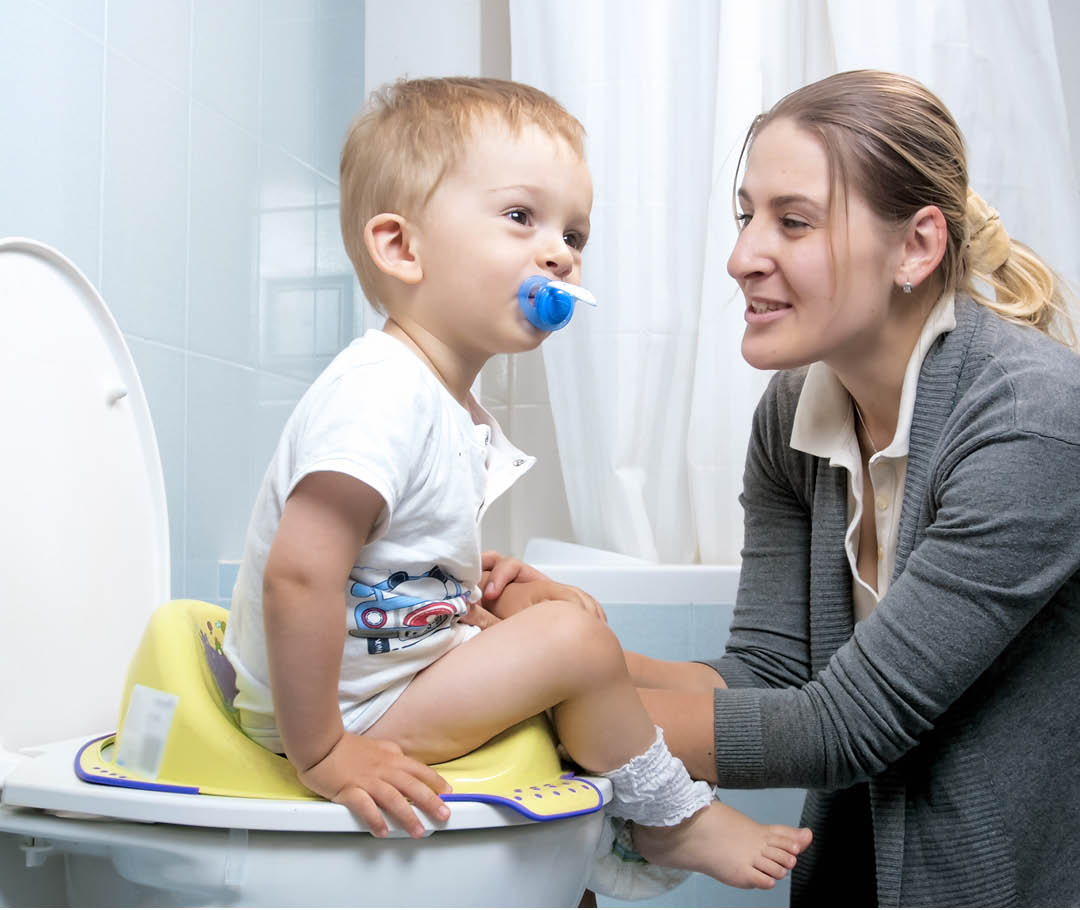
Potty training, toilet training, toileting… whichever term you use, tackling these skills can be a big deal for kids and their parents. Children with autism spectrum disorder (ASD) are often delayed at the age of successful toilet training, even when compared to children with other developmental disabilities. The average age in which a child is successfully toileting was 3.3 years of age for children with autism in comparison to 2.5 years of age for children with other developmental disabilities (Williams, Oliver, Allard, & Sears, 2003).
Extended use of diapers may diminish personal hygiene, self-confidence and increase physical discomfort, stigmatism, risk of problems later with bladder control and restrict participation in social activities (e.g., camp, after school program, etc.). Extended diaper use for children with autism is also problematic because these children may become so accustomed to using a diaper that they often demonstrate resistance to toilet-training procedures and will prefer to wait for a diaper in order to void (Tarbox, Williams, & Friman, 2004). Teaching independent toilet skill can improve the quality of life for children with autism and their families. Families will definitely benefit from the decreased costs of purchasing diapers, their children will feel empowered to address their physical needs independently all while decreasing the risk of complications associated with extended diaper use.
Before beginning toilet-training procedures, caregivers should check with their child’s doctors to rule out any medical conditions that may prevent their child from being successful with a toilet training program. Upon getting medical clearance, the next step will be to determine whether their child is showing signs that they are ready for toilet training. The following questions will assist with this step:
Each child and family is unique; therefore, the toilet training procedure needs to be designed to specifically fit the child and his/her family’s needs. Generally, caregivers and their clinician should identify and agree upon the child’s preferred mode of communication to best indicate when they need to use the restroom. This can be a specific word or phrase (e.g., “Potty”, “I need to use the toilet”, etc.) or it can be as simple as a hand signal or the presentation of an image of a toilet. To increase the potential for success, caregivers should have a preferred item or activity available (e.g. special snacks, video, etc.) and present it as a reward the moment that their child successfully voids in the toilet. This item should be reserved only for toilet training. The child should also receive lots of praise and high fives when he/she stay dry for a specific duration of time.
Going from using a diaper to using a toilet can be a big change and is extremely difficult for lots of children. If your child has a hard time with transitions, a picture schedule may be a helpful tool to remind him/her of what task are needed to complete the toileting routine. Some things to remember: make sure to have plenty of extra underwear and clothes, a comfortable potty chair, a timer, your child’s favorite drinks, and a positive attitude!
Toilet training may be a lengthy process and require a lot of patience. This is a big commitment but the payoff will be huge! Make sure to consult with your behavior analyst along the way to ensure the procedure is clear and is tailored to your child and family needs.
References
William, G., Oliver, J. M., Allard, A., & Sears, L. (2003). Autism and associated medical and familial factors: A case control study. Journal of Developmental and Physical Disabilities, 15, 335-349.
Tarbox, R. S. E., Williams, W. L., & Friman, P. C. (2004). Extended diaper wearing: Effects on continence in and out of the diaper. Journal of Applied Behavior Analysis, 37, 97-100.